Our chimney sweep starts from $405. That is the figure on our price list, and for a single open fireplace or a wood stove swept last season, it is usually the figure on the invoice. This post is for people in Mission Viejo who burn often and want to know when the bill climbs above the starting price, and why.
Who the starting price is written for
A household that lights a fire on Christmas Eve and twice more in January does not build up much in the chimney. A household that heats with a stove every evening from Thanksgiving to Easter can put buckets of soot and tar into the flue in one winter. Same house, same chimney, very different job. The starting price assumes the first kind of chimney. The rest of this page is about the second.
What adds to a sweep
These are the things that turn a starting-price sweep into a bigger quote, roughly in the order we meet them:
- How much has built up, and in what form. Light, flaky soot brushes out. Crunchy, tar-like buildup takes longer. The hard, shiny coat left by long, cool, choked-down burns is a separate job, and we price it once we have seen it.
- More than one flue. Each flue is swept on its own, so a stack carrying a fireplace flue and a stove flue is two sweeps.
- A stove connector. The pipe between a wood stove and the chimney collects the heaviest deposits. It comes apart, gets cleaned and goes back with sound joints.
- An insert in a masonry fireplace. Sweeping through an insert may mean pulling it forward or working from the roof down the liner.
- Nests and debris. A chimney with no cap can fill with sticks, leaves and the odd animal over the summer. Clearing that is extra time.
- A difficult roof. Steep tile roofs, common across Mission Viejo, take more care to walk and protect.
Why heavy burners care about the coat in the flue
Creosote is what is left of smoke that did not burn. It comes in roughly three forms, and the form matters more than the depth:
- A dry, powdery soot. Normal for a hot fire with dry wood. Easy to remove.
- Crusty, flaky tar. Usually from wood that was not quite dry or a fire turned down early. More work.
- A hard, shiny glaze. From slow, smoky burns with the air shut. The most flammable of the three and the hardest to get off.
We write down which form we found and where in the flue it sits. That note tells you more about your burn habits than anything we could say at the door.
Getting a sweep price for your chimney
Tell us what you burn in (an open fireplace, a stove, an insert), how often you light it in a typical winter, and anything odd you have noticed, such as smoke in the room, a strong smell in summer or black flakes on the hearth. Send that through this form. For a plain fireplace or a stove swept last year, the starting price stands. For heavier work we confirm the figure in writing before we start.
What every sweep includes
Each sweep we do covers the same ground:
- drop cloths down and the opening sealed so the dust stays in the chimney;
- brushes and rods run the full height of the flue, with a vacuum pulling dust away;
- the smoke shelf and smoke chamber cleared;
- the stove connector taken down, cleaned and refitted where there is one;
- the damper worked and checked;
- the cap and the top of the flue looked at from the roof;
- a short written note of what came out and what form it took.
A Level 1 inspection, at $160, can be done in the same visit. For a chimney you burn hard every year, that is a cheap way to get a written record of the flue's condition.
When we recommend more than a sweep
If the sweep shows cracked flue tile, a liner that has come apart, or heat damage from an earlier chimney fire, we stop and tell you. The next step is a Level 2 inspection at $380, which puts a camera through the flue so you can see what we saw. It is also the right inspection after you go from a fireplace to a stove, or from one stove to another.
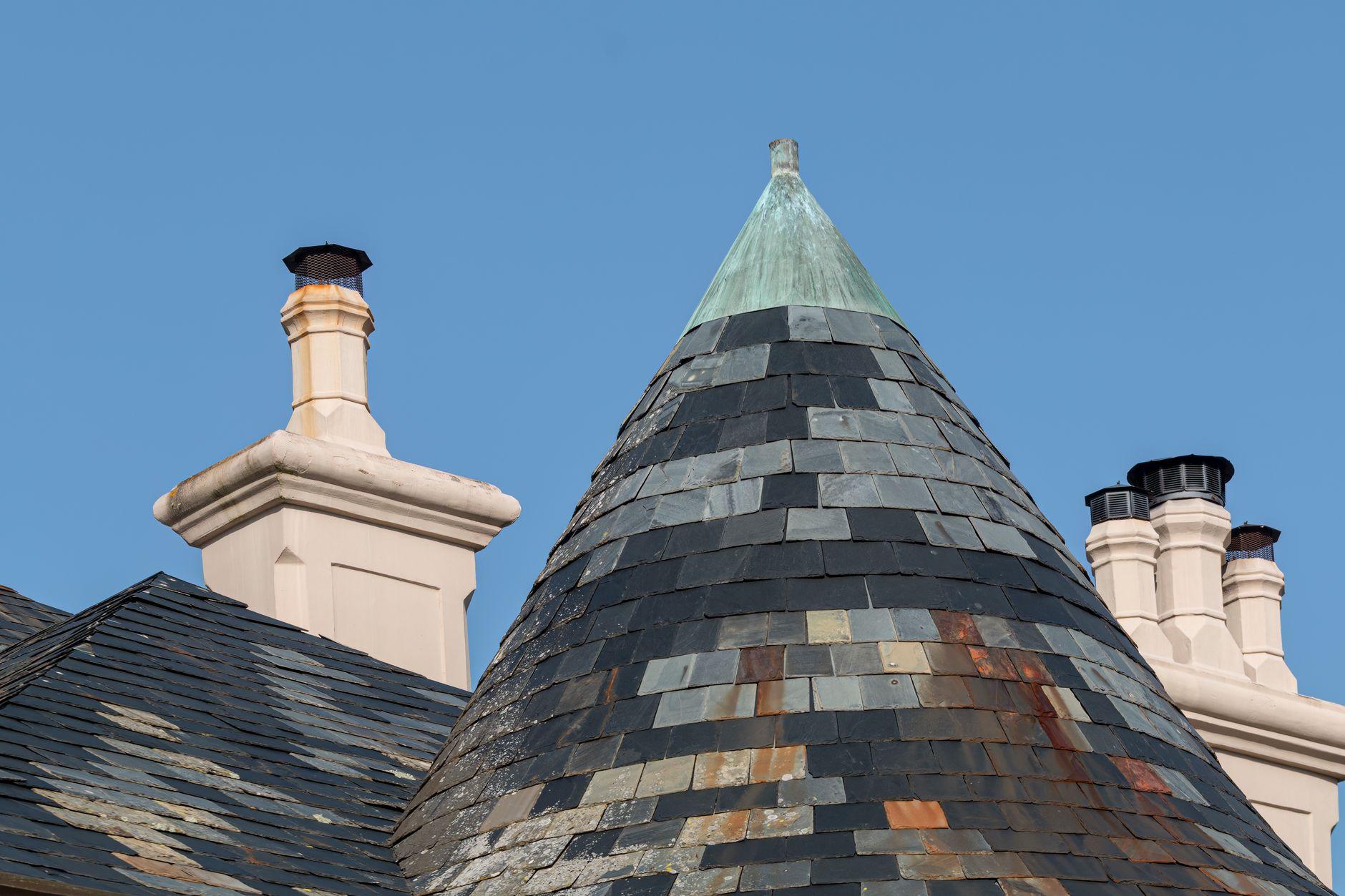
A missing cap is another common finding on chimneys that burn often. Without one, sparks can land on a dry roof or in the yard when Santa Ana winds blow. Caps are quoted after we measure, and the price depends on the size and shape of the chimney top.
How often a heavy burner should book
The common guideline is to sweep when deposits reach about an eighth of an inch, or once a year, whichever comes first. For someone who heats with a stove all winter, that can mean once before the season and once partway through. After the first sweep we will tell you which pattern your chimney seems to follow, based on what came out.
What the sweep note says about your firewood
The chimney keeps a record of how you burn whether anyone reads it or not. Wood split and stacked under cover for a season leaves powdery soot. Wood brought in green, or fires shut down hard for an overnight burn, leave the crust and the glaze. When the same chimney goes from one to the other between visits, the note shows it, and you can see the change in your next price.
When you are ready to book a sweep in Mission Viejo or nearby, our contact page takes the request.
Would You Rather We Looked at It?
Reading helps, but a stove shows its wear up close. Crockett Chimney Solutions works out of Mission Viejo on wood stoves, pellet stoves and the flues above them, and every repair is priced in writing before we start.